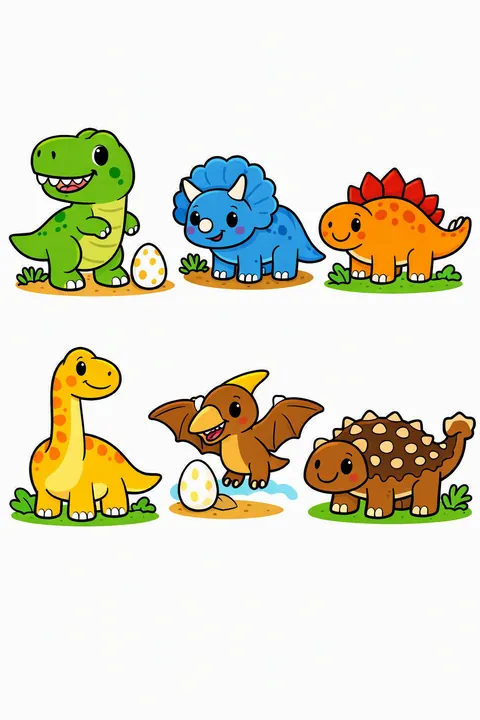
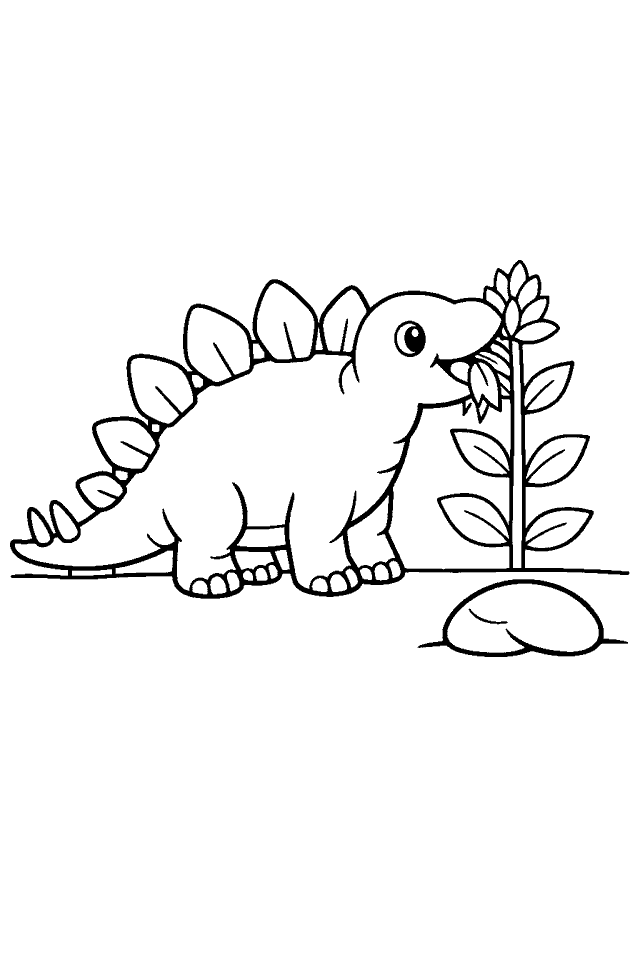
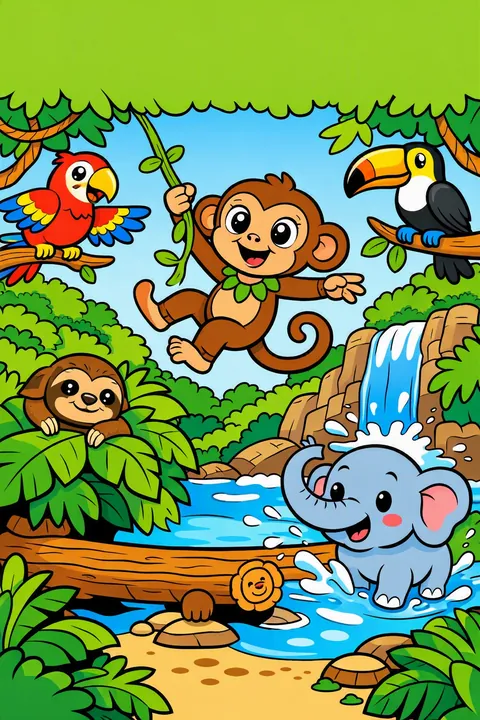
Start with who will color it
A coloring book works when the child holding the crayon can finish a page and feel proud of it. That depends far more on the child than on the theme. Before you choose dinosaurs or dolphins, picture the person who will color: how they hold a crayon, how long they like to sit, and whether they enjoy tiny details or get frustrated by them.
- Little hands need one big subject per page, thick outlines and large areas that a whole crayon can fill.
- Kids enjoy a main subject with a simple background: a sun, a tree, a few flowers.
- Older kids like smaller areas, patterns and scenes with more going on.
If the book is for several ages, make it for the youngest child who will use it. Older children will add their own patterns; younger children cannot remove detail that is too small for them.
One theme, a list of scenes
A theme gives the book a reason to exist: a trip to the farm, a snowy day, the ocean, the helpers in your neighborhood. Once you have one, write a short list of scenes, one line each, before anything is drawn. “A cow in the meadow. A pig in a muddy puddle. A hen with her chicks.” A list makes it easy to spot repeats and gaps, and to move the most exciting scene to the end.
Mix familiar and surprising scenes. Children like to recognize things they know, and they remember the page where the tractor gives the goat a ride.
Closed lines and big areas
The most important technical choice is invisible when it is done right: every area should be closed. If an outline has a gap, a paint-bucket tool on a screen spills into the next area, and a young child with a crayon has no clear edge to stop at. Closed shapes also make it easier to talk about colors: “What color should the whale’s tail be?”
Areas should be big enough for the tool. Crayons and thick markers need more room than colored pencils. A good test is to imagine coloring the smallest area on the page with the tool the child will actually use.
Keep each page simple
One scene per page is a good rule. Crowded pages look impressive in a preview and are tiring to color. A few other habits help:
- Avoid gray shading and textures; they look muddy once color goes on top.
- Keep text out of the picture itself; put any words underneath.
- Leave some breathing room around the main subject so it stands out.
- Give faces friendly, simple expressions that are easy to color around.
Captions or pictures only
A coloring book can simply be pictures, or it can tell a small story with one short line under each picture. Captions are useful for early readers and for books with recurring characters, because they carry the story from page to page. Pictures only is better for the youngest children and for books that are about the theme rather than a plot. Either way, keep captions short: one sentence that matches exactly what is drawn.
Characters who come back
If a character appears on more than one page, describe them once and keep that description the same: the same shape, the same clothes, the same features. Children notice when a favorite character changes. A connected set of books can bring the same friends back for new adventures, which gives children a reason to ask for the next one.
Check every page
Before you print, look at each page as the child will see it.
- Every outline is closed.
- The smallest area fits the tool the child will use.
- There is no gray shading.
- The page shows one clear scene.
- Nothing on the page is scary or confusing for the intended age.
- The caption, if there is one, matches the picture.
Printing at home
Plain printer paper works well for crayons and colored pencils. Markers can bleed through, so print single-sided or use a heavier paper. Print one test page first to check the margins, then print the rest. Printing a page twice lets a child try two color ideas, or lets siblings color the same scene.
Making it with StoryMint
In StoryMint, choose Coloring book, describe the theme and pick a line style: big shapes for little hands, bold lines or fine lines. Turn captions on if you want a short line of story under each picture. StoryMint draws black-and-white line art with bold outlines, one scene per page. Before a page goes into your book, StoryMint checks that a paint-bucket fill stays inside the lines, that the lines are thick enough to print and that there is no gray, and a page that fails is drawn again. You still review every page before you print; that final look is what makes the book right for your child.
See real coloring pages first.
Browse pages from coloring books made by the StoryMint team, sorted by age, then start your own.
Explore coloring books →