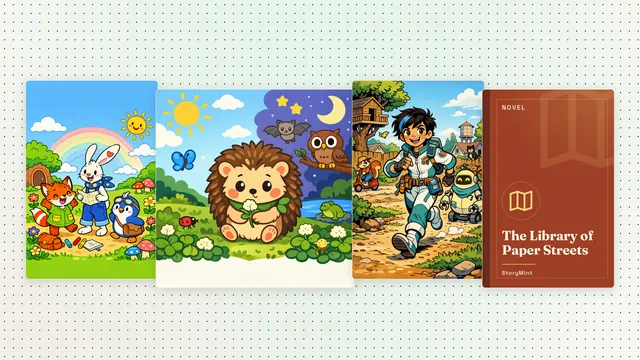
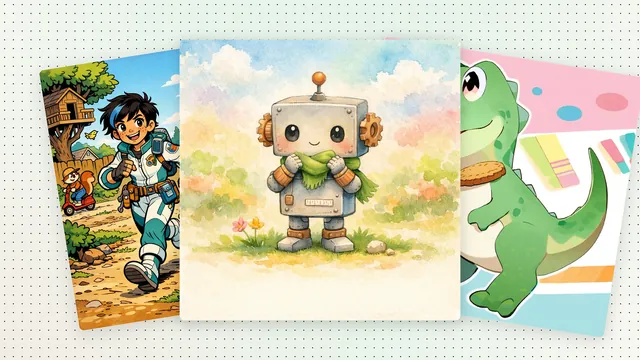
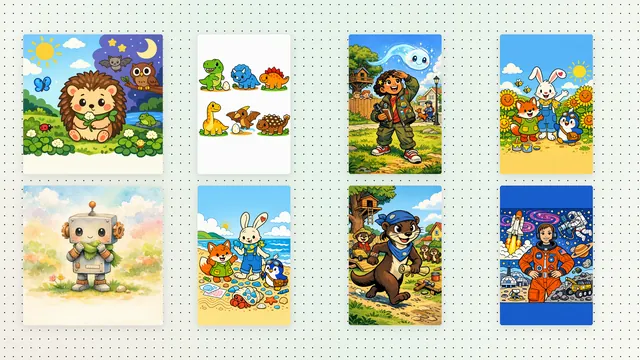
One cast, a whole series: keeping characters consistent from book to book
A story world keeps your characters, places and rules in one place, so the next book starts from the same cast. Plus what our own coloring series taught us.
Kids fall for characters. Once a family has a favorite fox or a brave little robot, the next question is always "what happens to them next?". Making a second book with the same characters used to mean describing everyone again from scratch and hoping they came out the same. Story worlds fix that.
What a story world is
A story world is a saved place for everything a series should keep:
- Characters, each with a name and a few words about how they look, like "blue apron, brass moon compass".
- The world itself: what kind of place it is and its mood, like "a cozy town where moonlight turns ordinary recipes into tiny acts of magic".
- Things that are always true, the rules of your world, like "moon recipes only work when shared".
- The books you've already made in that world.
When you start a new book from a story world, StoryMint begins from that cast and those rules instead of a blank page, and the earlier books come along as context.
How to start one
- Open Story worlds and create a new world. Give it a name and describe what it's like.
- Add your first character: a name and how they look. You can add more characters and places later.
- Choose Create a book in this world, describe the plot of this book, and start it.
- For the next book, open the same world again. The characters are already there.
What our own series taught us
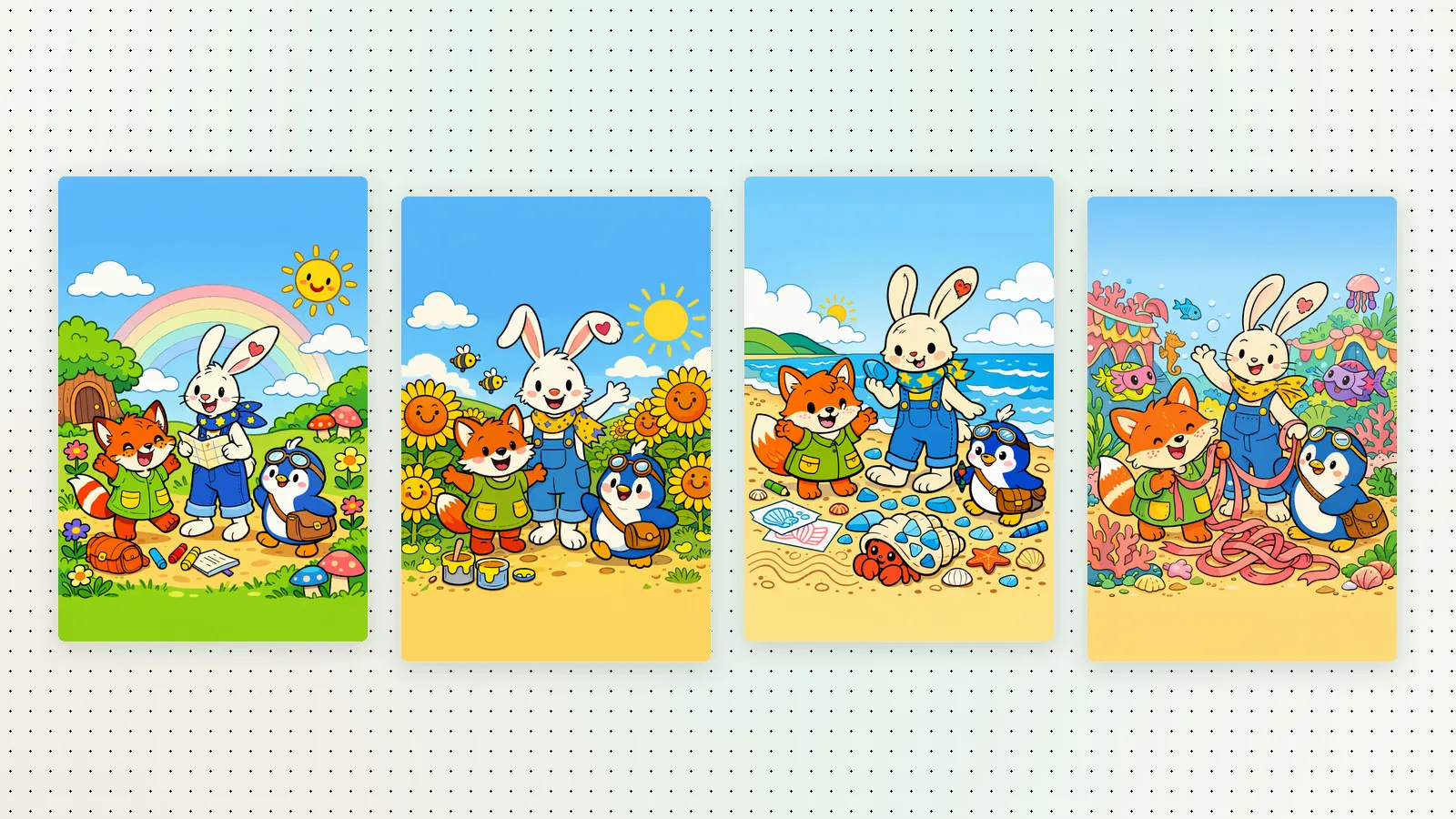
The StoryMint team tested the idea of a long series on coloring books first. Maple & Moonbeam's Great Coloring Quest is a 20-book series with the same three friends, a fox, a rabbit and a penguin, on every cover and in every book. To keep them recognizable, every book in the series started from the same written description of each friend: a small fox in a cozy tunic with a striped tail tip, a tall rabbit in dungarees and a starry scarf, and a plump little penguin with tiny goggles.
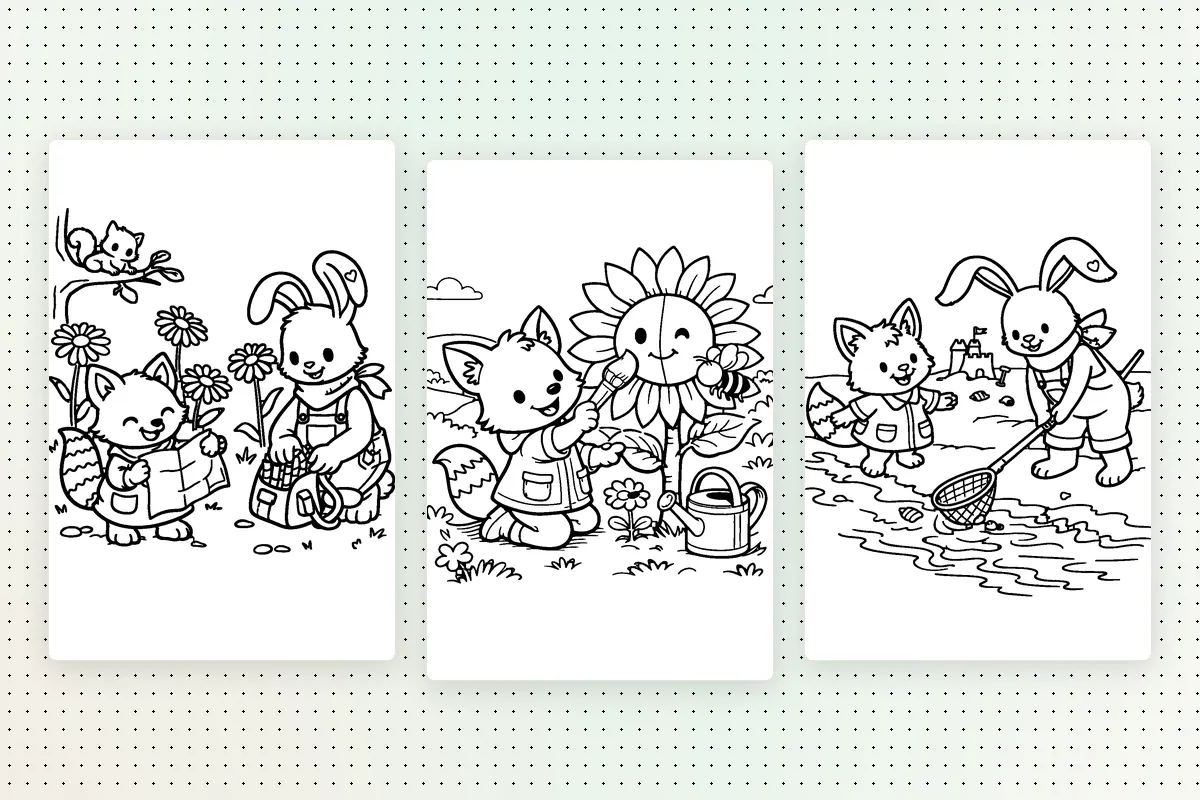
Three lessons from making it:
- Short, concrete descriptions work best. "Striped tail tip, starry scarf, tiny goggles" holds up from book to book; "adventurous and kind" doesn't show up in a drawing.
- Keep a signature detail. A scarf, a hat, a color. Small things are what readers use to recognize a character.
- Look at every page. A story world gives every book the same starting point, but drawings can still drift. Review each book before you share it, the same way you would any other book.
Good uses for a story world
- A bedtime series about the same family pet.
- A classroom mascot who appears in a new book every term.
- Siblings as heroes, described once and reused for every birthday book.